Protection of sea turtles

Suivie des pontes

Lorem Ipsum is simply dummy text of the printing and typesetting industry. Lorem Ipsum has been the industry’s standard dummy text ever since the 1500s, when an unknown printer took a galley of type and scrambled it to make a type specimen book. It has survived not only five centuries, but also the leap into electronic typesetting, remaining essentially unchanged. It was popularised in the 1960s with the release of Letraset sheets containing Lorem Ipsum passages, and more recently with desktop publishing software like Aldus PageMaker including versions of Lorem Ipsum.

Why Monitor the Bigwigs?

Nesting beaches are critical areas for the survival of sea turtles. Every year, females return to their native beaches to lay their eggs. Monitoring these nests allows us to collect essential data on populations, identify threats, and implement effective protection measures.

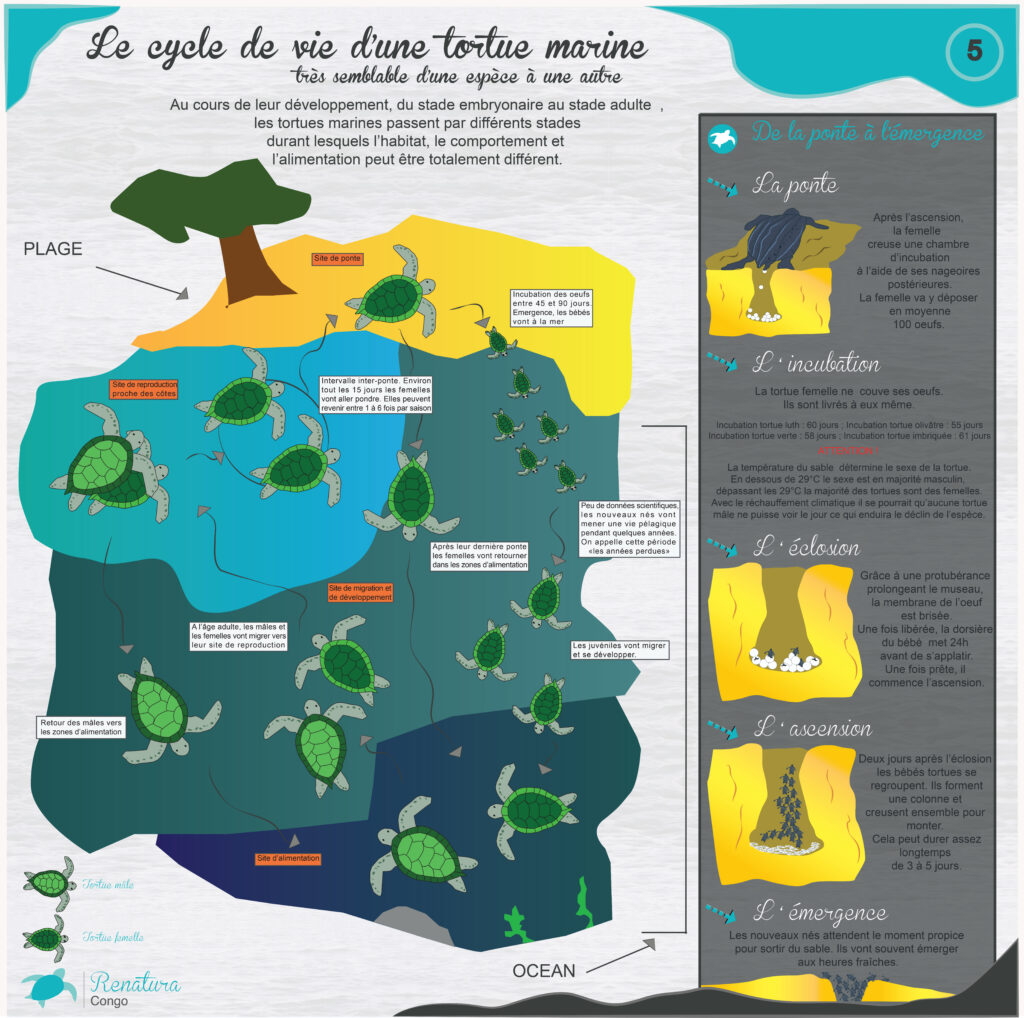
Understanding the Laying Cycle

Migration

Les tortues adultes migrent depuis leurs zones d’alimentation vers les plages de ponte, parcourant parfois des milliers de kilomètres.

Mating

Mating takes place at sea, near spawning grounds, usually between March and September.

Care for Injured Turtles

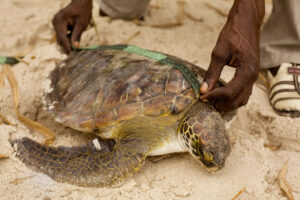
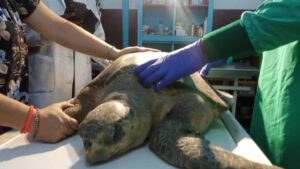
Close collaboration with 23 fishing villages to quickly report and release turtles caught accidentally.

Incubation

The eggs incubate in the sand for 45 to 70 days. The temperature of the sand determines the sex of the hatchlings.

Hatching

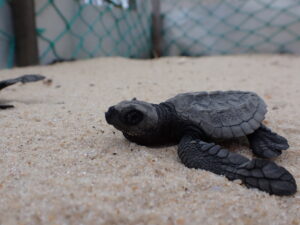
Baby turtles usually emerge from the nest at night and instinctively head towards the sea, guided by the light.

Return

After 20 to 30 years, females return to their native beach to lay their own eggs, perpetuating the cycle.

Our Monitoring Methodology

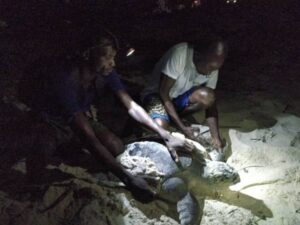
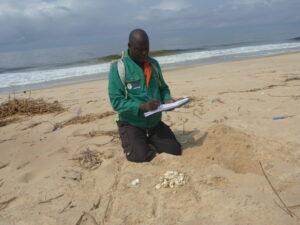
Night Patrols

  • Beach monitoring during the nesting season
  • Identification of traces of climbing
  • Location of newly laid nests
  • Immediate protection against predators

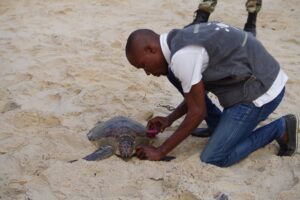
Data Collection

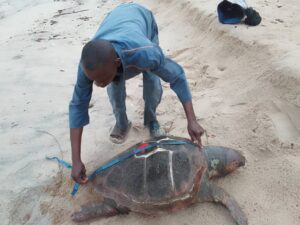
  • Measuring and weighing laying hens
  • Comptage du nombre d’œufs par nid
  • Marking turtles for individual tracking
  • GPS recording of nesting sites

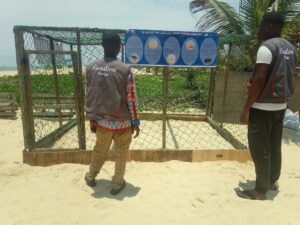
Nest Protection

  • Marking and signaling nests
  • Installation of protective fencing
  • Surveillance against poaching
  • Raising awareness among local residents

Outbreak Monitoring

  • Monitoring de la période d’incubation
  • Observation of newborn emergence
  • Comptage des taux d’éclosion
  • Assistance for twisted individuals in difficulty

Scientific Analysis

  • Compilation of collected data
  • Analysis of demographic trends
  • Assessment of reproductive success
  • Publication of results

Community Engagement

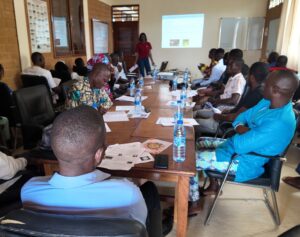
  • Training of local eco-guards
  • Community awareness
  • Involvement of schools
  • Knowledge sharing

Priority Monitoring Areas

The main nesting sites monitored along the Congolese coastline

Loango Bay

Priority nesting area for leatherback and olive ridley sea turtles. Site of high ecological importance with a high density of nests.

Length:
Main season:
25 miles of beaches
October - March

Conkouati-Douli

Protected national park with pristine nesting beaches. Essential breeding area for several species of sea turtles.

Length:
Main season:
50 miles of coastline
November - April

Wild Coast of Pointe-Noire

Plages périurbaines nécessitant une surveillance renforcée en raison des pressions anthropiques et de l’urbanisation croissante.

Length:
Main season:
15 miles of beaches
September - February

Monitored Sea Turtle Species

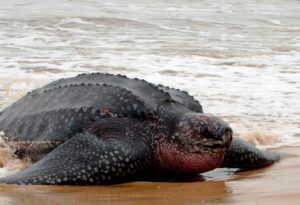
Leatherback turtle

Dermochelys coriacea

Critically endangered

The largest of the sea turtles, reaching up to 2 meters and 600 kg. A priority species for conservation, with regular nesting on our coasts.

Green Turtle

Chelonia mydas

In danger

Herbivore jouant un rôle crucial dans l’écosystème marin. Présence occasionnelle sur les plages de ponte du Congo.

Olive Ridley Turtle

Lepidochelys olivacea

Vulnerable

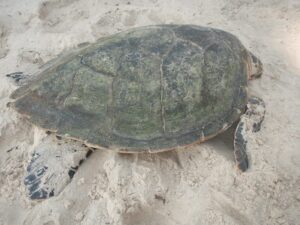
Small sea turtle that lays eggs regularly. The species most frequently observed during our night patrols.

Loggerhead sea turtle

Caretta caretta

Vulnerable

Turtle with a massive head and reddish-brown shell. Occasional sightings on the Congolese coast.

Hawksbill Turtle

Eretmochelys imbricata

Critically endangered

Recognizable by its pointed beak. Rare but documented presence during our monitoring of coral reefs.

wpChatIcon